Tuesday, July 25, 2006
Wednesday, July 19, 2006
Problem Texts
Hebrews 6
Therefore let us leave the elementary doctrine of Christ and go on to maturity, not laying again a foundation of repentance from dead works and of faith toward God, 2and of instruction about washings, the laying on of hands, the resurrection of the dead, and eternal judgment. And this we will do if God permits. For it is impossible to restore again to repentance those who have once been enlightened, who have tasted the heavenly gift, and have shared in the Holy Spirit, and have tasted the goodness of the word of God and the powers of the age to come, if they then fall away, since they are crucifying once again the Son of God to their own harm and holding him up to contempt. For land that has drunk the rain that often falls on it, and produces a crop useful to those for whose sake it is cultivated, receives a blessing from God. But if it bears thorns and thistles, it is worthless and near to being cursed, and its end is to be burned.
Calvin on Hebrews 6
http://www.ccel.org/c/calvin/comment3/comm_vol44/htm/xii.ii.htm
Calvin on Romans 11
http://www.ccel.org/c/calvin/comment3/comm_vol38/htm/xv.iv.htm
Calvin on James 4
http://www.ccel.org/c/calvin/comment3/comm_vol45/htm/vi.vi.vii.htm
AW Pink on Hebrews 6
http://www.pbministries.org/books/pink/Hebrews/hebrews_024.htm
Therefore let us leave the elementary doctrine of Christ and go on to maturity, not laying again a foundation of repentance from dead works and of faith toward God, 2and of instruction about washings, the laying on of hands, the resurrection of the dead, and eternal judgment. And this we will do if God permits. For it is impossible to restore again to repentance those who have once been enlightened, who have tasted the heavenly gift, and have shared in the Holy Spirit, and have tasted the goodness of the word of God and the powers of the age to come, if they then fall away, since they are crucifying once again the Son of God to their own harm and holding him up to contempt. For land that has drunk the rain that often falls on it, and produces a crop useful to those for whose sake it is cultivated, receives a blessing from God. But if it bears thorns and thistles, it is worthless and near to being cursed, and its end is to be burned.
Calvin on Hebrews 6
http://www.ccel.org/c/calvin/comment3/comm_vol44/htm/xii.ii.htm
Calvin on Romans 11
http://www.ccel.org/c/calvin/comment3/comm_vol38/htm/xv.iv.htm
Calvin on James 4
http://www.ccel.org/c/calvin/comment3/comm_vol45/htm/vi.vi.vii.htm
AW Pink on Hebrews 6
http://www.pbministries.org/books/pink/Hebrews/hebrews_024.htm

Saturday, July 08, 2006

Saturday, July 01, 2006
Cornelius Van Til: Father of Presuppostional Apologetics

Cornelius Van Til (May 3, 1895 - April 17, 1987), born in Grootegast, the Netherlands, was a Christian philosopher, Reformed theologian, and presuppositional apologist.
Van Til was a graduate of Calvin College, Princeton Theological Seminary and Princeton University. He began teaching at Princeton, but shortly went with the conservative group who founded Westminster Theological Seminary, where he taught for forty-three years of his life as a professor of apologetics. He was also a minister in the Orthodox Presbyterian Church from the 1930s until his death in 1987.
Van Til drew upon the works of Dutch Calvinist philosophers such as D. H. Th. Vollenhoven and Herman Dooyeweerd and theologians such as Herman Bavinck to bring together a fresh approach to Christian apologetics, which opposed the traditional methodology of reasoning on purportedly neutral grounds with the non-Christian. He did not particularly care for the label describing his approach as "presuppositional," which more accurately represents the apologetical method of Gordon Clark, but he (and his students) accepted it as a matter of convention because it is at least useful in grouping methods into those which deny neutrality and those which do not.
In Van Til: The Theologian, Frame, a sympathetic critic of Van Til, describes Van Til's contributions to Christian thought as comparable in magnitude to those of Immanuel Kant in non-Christian philosophy. He indicates that Van Til identified the disciplines of systematic theology and apologetics, seeing the former as a positive statement of the Christian faith and the latter as a defense of that statement -- "a difference in emphasis rather than of subject matter." Frame summarizes Van Til's legacy as one of new applications of traditional doctrines:
Unoriginal as his doctrinal formulations may be, his use of those formulations -- his application of them -- is often quite remarkable. The sovereignty of God becomes an epistemological, as well as a religious and metaphysical principle. The Trinity becomes the answer to the philosophical problem of the one and the many. Common grace becomes the key to a Christian philosophy of history. These new applications of familiar doctrines inevitably increase [Christians'] understanding of the doctrines themselves, for [they] come thereby to a new appreciation of what these doctrines demand of [them].
Similarly, Van Til's innovative application of the doctrines of total depravity and the ultimate authority of God led to his reforming of the discipline of apologetics. Specifically, he denied neutrality on the basis of the total depravity of man and the invasive effects of sin on man's reasoning ability (as per the usual Calvinistic understanding of the first chapter of the Epistle to the Romans), and he insisted that the Bible, which he viewed as a divinely inspired book, be trusted preeminently because he believed the Christian's ultimate commitment must rest on the ultimate authority of God.
As Frame says elsewhere, "the foundation of Van Til's system and its most persuasive principle" is a rejection of autonomy since "Christian thinking, like all of the Christian life, is subject to God's lordship" ("Van Til and the Ligonier Apologetic," p. 282). However, it is this very feature that has caused some Christian apologists to vehemently reject Van Til's approach. For instance, D. R. Trethewie describes Van Til's system as nothing more than "a priori dogmatic transcendental irrationalism, which he has attempted to give a Christian name to" (A Critique of Cornelius Van Til, p. 15).
Francis Schaeffer: American Evangelical of the Century
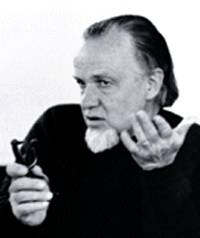
Francis A Schaeffer (January 30, 1912–May 15, 1984), an American Christian theologian, philosopher, and Presbyterian pastor, is most famous for his writings and his establishment of the L'Abri community in Switzerland. Opposed to theological modernism, Schaeffer promoted an orthodox Protestant faith and a presuppositional approach to Christian apologetics, which he believed would answer the questions of the age.

Immanuel Kant and Transcendental Idealism

Immanuel Kant (22 April 1724 – 12 February 1804), was a German philosopher from Königsberg in East Prussia (now Kaliningrad, Russia). He is regarded as one of the most influential thinkers of modern Europe and the last major philosopher of the Enlightenment.
Kant was a proponent of
Transcendental Idealism is the philosophy that makes us aware of the fact that the first and essential laws of this world that are presented to us are rooted in our brain and are therefore known a priori. It is called transcendental because it goes beyond the whole given phantasmagoria to the origin thereof. Therefore, as I have said, only the Critique of Pure Reason and generally the critical (that is to say, Kantian) philosophy are transcendental.
Schopenhauer
— Parerga and Paralipomena, Volume I, "Fragments for the History of Philosophy," § 13
Is Your Faith Rational or is Rationalism a Basis for Faith?

Rationalism is a philosophical doctrine that asserts that the truth can best be discovered by reason and factual analysis, rather than faith, dogma or religious teaching. Its original roots extend at least as far back as Plato. Rationalism has some similarities in ideology and intent to humanism and atheism, in that it aims to provide a framework for social and philosophical discourse outside of religious or supernatural beliefs; however, rationalism differs from both of these, in that:
As its name suggests, humanism is centered on the dignity and worth of people. While rationalism is a key component of humanism, there is also a strong ethical component in humanism that rationalism does not require. As a result, being a rationalist does not necessarily mean being a humanist.
Atheism, a disbelief or lack of belief in God, can be on any basis, or none at all, so it doesn't require rationalism. Furthermore, rationalism does not, in itself, affirm or deny atheism, although it does reject any belief based on faith alone. Modern-day rationalism is strongly correlated with atheism, although historically this was not so. Most—if not all—prominent rationalists today, including scientists such as Richard Dawkins and activists such as Sanal Edamaruku are atheists.
Outside of religious discussion, the discipline of rationalism may be applied more generally, for example to political or social issues. In these cases it is the rejection of emotion, tradition or fashionable belief which is the defining feature of the rationalist perspective.
During the middle of the twentieth century there was a strong tradition of organized rationalism, which was particularly influenced by free thinkers and intellectuals. In the United Kingdom, rationalism is represented by the Rationalist Press Association, founded in 1899.
Rationalism in this sense has little in common with the historical philosophy of continental rationalism expounded by René Descartes and Gottfried Wilhelm von Leibniz. British empiricism of the 17th and 18th Century and logical positivism of the early 20th Century, though starkly opposed to continental rationalism, are in certain respects compatible with rationalism in the present sense. Indeed, a reliance on empirical science is often considered a hallmark of modern rationalism.
Friday, June 30, 2006
American Episcopal rift over Gay Bishops Widens

NEW YORK - Two more Episcopal dioceses that consider gay relationships sinful are distancing themselves from the denomination by seeking oversight from fellow Anglicans overseas instead of the American church.
The Dioceses of Springfield, Ill., and Central Florida have joined three other dioceses in rejecting the authority of the Episcopal presiding bishop-elect — a step short of schism — and asking Archbishop of Canterbury Rowan Williams to assign them another leader.
Springfield Bishop Peter Beckwith said in a statement Friday that his diocese objects to Nevada Bishop Katharine Jefferts Schori, who will be installed Nov. 4, because she supports ordaining partnered gays and blessing same-sex couples, among other reasons. Earlier this week, the Dioceses of Pittsburgh, South Carolina and San Joaquin, Calif. made similar statements.
The Episcopal Church, with more than 100 dioceses, is the U.S. branch of the global Anglican Communion, the association of churches that trace their roots to the Church of England.
As the communion's spiritual leader, Williams has been struggling to keep the fellowship unified despite deep differences over the Bible and sexuality.
He said this week that the divisions have become so deep that member churches who support ordaining gays may have to accept a lesser role in the communion to prevent a permanent break.
Who Shot Bobby Kennedy?

Almost 40 years have transpired since 1968 Democtratic Presidential front- runner Robert Kennedy was shot and killed by Sirhan Sirhan in a Los Angeles Hotel. Kennedy, then the junior senator from New York and fomer Attorney General of the United States under his older brother John F. Kennedy.
Many historians and other astute observers of American life and politics have often asked the question "What if Bobby Kennedy lived?"
1968 was one of the most turmoil filled years in American history and the country was almost torn apart over the Vietnam War.
The war in Southeast Asia had greatly divided the country and was very unpopular, so much so it caused then President Lyndon Baines Johnson not to seek re-election.
Bobby Kennedy was a vocal opponent of the Vietnam War, if he had lived and won election as President in 1968, would he have stopped the war sooner? Would many American troops have survived?
An estimated 58,000 American men died in the War in Vietnam, if Bobby Kennedy became president would many of those men lived?
The Bible says in Ephesians 1:11 that" God works all things after the counsel of His will", so was not God ultimately responsible for the death of Bobby Kennedy and the continuation of the Vietnam War that ultimately came to an end in 1975 with the fall of Saigon?
So the question must be asked, "Who Shot Bobby Kennedy?"
Greg Bahnsen on Presuppostional Apologetics
The Impropriety of Evidentially Arguing for the Resurrection by Dr. Greg Bahnsen
It is indubitable that the resurrection of Jesus Christ has paramount significance for the history of redemption and for Christian theology (cf. Rom. 4:25; 1 Peter 1:3). It is also clear that this resurrection must be held by the Biblical Christian as one which took place in calendar time and involved Jesus' empirical body (cf. Luke. 24:39; 1 Cor. 15:4). Moreover, a decisive refutation of the resurrection would shatter the validity of the Christian faith (cf. 1 Cor. 15:14, 17).
Hence the Christian's affirmation of Christ's resurrection is not an empty assumption, dreamy speculation, or a timeless axiom. The Biblical faith is not indifferent to God's acts in history, nor is it pessimistic about evidences. The dead bones of Jesus will never be found, and the believer need never fear investigation into the facts. All facts are created facts which can be properly understood only when given the interpretation the Creator intends; as such, all facts demonstrate the truth of Christianity. So any and all relevant evidence pertaining to Jesus Christ's resurrection in history will be significant for the believer. And such evidence can have a role in his apologetical efforts.
However, a serious difficulty arises when the epistemological significance of the resurrection is separated from its soteriological function. It is correct to hold that God's raising of Jesus from the dead saves us both from sin and agnosticism, but it would be mistaken to understand by this that the epistemological problem could be handled independently of the (broader) moral problem which is at its base. It is with regret that one notices neo-evangelicals severing the justifying efficacy of Christ's resurrection from its truth-accrediting function. In reality, the latter is dependent upon the former. Only as Christ's resurrection (with its ensuing regeneration by the Holy Spirit of Christ) saves a sinner from his rebellion against God and God's word can it properly function to exhibit evidence for God's truthfulness.
Evangelicals are often prone to generate inductive arguments for the veracity of Christianity based on the historical resurrection of Christ, and such arguments occupy central importance in this apologetic. It is felt that if a man would simply consider the "facts" presented and use his common reasoning sense he would be rationally compelled to believe the truth of scripture. In such a case the evidences for Christ's resurrection are foundational to apologetical witnessing, whereas their only proper place is confirmatory of the believer's presupposed faith. There is a certain impropriety about attempting to move an opponent from his own circle into the circle of Christian belief by appealing to evidence for the resurrection, and there are many reasons why the evidentialist's building a case for Christianity upon neutral ground with the unbeliever ought to be avoided.
The first is the Lordship of Christ over the whole of the Christian's life, even his intellectual endeavors. Our every thought must be obedient to Christ (2 Cor. 10:5), and only when He is set apart as Lord in our thinking will we be able to offer a reason for the hope in us (1 Peter 3:15). The Christian cannot relinquish his submission to God's authority in order to reason upon some alleged neutral ground. God makes a radical demand on the believer's life which involves never demanding proof of God or trying Him. Even the Incarnate Son would not put God to the test, but rather relied upon the inscripturated word (cf. Matt. 4). The Christian does not look at the evidence impartially, standing on neutral ground with the unbeliever, waiting to see if the evidence warrants trust in God's truthfulness or not. Rather, he begins by submitting to the truth of God, preferring to view every man as a liar if he contradicts God's truthfulness or not.
Rather, he begins by submitting to the truth of God, preferring to view every man as a liar if he contradicts God's word (cf. Rom. 3:4). No one can demand proof from God, and the servant of the Lord should never give in to any such demand (and obviously, neither should he suggest that such a demand be made by the unbeliever). The apostles were certainly not afraid of evidence; yet we notice that they never argued on the basis of it.
They preached the resurrection without feeling any need to prove it to the skeptics; they unashamably appealed to it as fact. They explained the meaning of the resurrection, its significance, its fulfillment of prophecy, its centrality in theology, its redemptive power, its promise and assuring function - but they did not attempt to prove it by appealing to the "facts" which any "rational man" could use as satisfying scholarly requirements of credibility. By trying to build up a proof of the resurrection from unbiased grounds the Christian allows his witness to be absorbed into a pagan framework and reduces the antithesis between himself and the skeptic to a matter of a few particulars. The Christian world-view differs from that of unbelief at every point (when the skeptic is consistent with his avowed principles), and it is the only outlook which can account for factuality at all. The Christian apologete must present the full message of Christ with all of its challenge and not water it down in order to meet the unbeliever on his own faulty grounds.
Secondly there is a myriad of methodological problems which afflict an evidential argument for the resurrection which is foundational rather than confirmatory of a presupposition. We note immediately that an inductive (historical) argument rests for its validity on the premise of uniformity (past and present) in nature; this makes possible a consideration of an analogy of circumstance. Yet the very point which the evidentialist is trying to prove is that of miracle, i.e. discontinuity. So he is enmeshed in using a principle of continuity to establish the truth of discontinuity! When the evidentialist seeks to exhibit that the resurrection very probably occurred as a unique truth-attesting sign he is divided against himself.
Furthermore, since inductive argumentation is dependent upon the premise of uniformity, and since this premise can only be established by a Christian presupposing the truth of scripture (for Hume's skepticism has yet to be countered on anything but presuppositional grounds), the "evidentialist's" argument is really presuppositional at base anyway. The non-Christian has no right to expect regularity in nature and the honest skeptic knows it; so an inductive argument for the historical resurrection could only have been probative force for one who granted the truth of Christianity already. Next, we observe that probability is statistically predicated of a series in which an event reoccurs on a regular basis; that is, general probability might be proven for a reoccurring event, but the resurrection of Christ is a one-time event. Can probability be predicated of a particular occurrence? Not normally. Again, we note that in recent years the crucial role of paradigms for factual argumentation has become evident (cf. T. S. Kuhn, The Structure of Scientific Revolutions).
Facts are "facts" for particular theories in which they function; hence the fact of Christ's resurrection can be granted and understood only within the Christian paradigm or presupposition. The rules of evidence and argumentation are not the same for a Christian and non-Christian; they will have different authorities for final appeals, different standards of proof, different sets of considerations which are assumed to be crucially relevant, etc. Hence a step by step argument from the supposition of the historical reliability in the resurrection accounts and its denial is not possible. Another brief indication of difficulty in the evidentialist's attempt to establish the resurrection of Christ is found in the logic of the argument if it be taken as intending to prove the possibility of indeterminacy and oddity in the universe or history; such an argument would point to a world ted by chance, whereas the scriptures clearly present God as sovereignly controlling everything by the word of His power. If oddity and chance become the crux of one's apologetic, then he has forfeited the orthodoxy of his witness. Finally, once the evidentialist has failed to maintain that Christianity is the only adequate basis for a meaningful interpretation of historical facts and not simply a working hypothesis which is "as plausible" as the next with respect to isolated facts, and once he has lowered his sights by appealing to the probability of scripture's truth, then he has left the door open for the skeptic's escape to considerations of possibility. If Christ only probably arose, then it is possible that the evidence adduced has a completely different interpretation; even if certain facts seem to point to the probable resurrection of Jesus, it is admitted that other evidence points to the disconfirmation of the gospel records! But this is not the Christian position, for according to it there is no possibility that Christ did not arise; this is a foundational, incorrigible fact as revealed in God's authoritative word.
Now even if the above considerations were put aside for a moment we would still have to see that the evidential argument for Christ's resurrection is unsuitable as the crux for our apologetic. Under cross-examination most of the considerations brought forth by evidentialists can be dismissed as overstated, gratuitous, or inconclusive. There is little if any basis for holding to a resurrection as probably taking place in the past and arguing that the witnesses are probably reliable is a completely different matter. It is also unsuitable for the intended aim of the argument, for the very place that the witnesses could be mistaken, deceptive, or distorted might be the very event under question! But even putting aside these things, the evidentialist may prove the historical resurrection of Christ, but he proves that it is simply an isolated and uninterpreted "freak" event in a contingent universe. He is still stranded on the far side of Lessing's ditch (i.e. the skeptic can grant that Christ arose and then simply ask what that odd, ancient fact has to do with his own present life and experience). The fact that Christ rose from the dead does not prove anything within the neutral framework of an evidentialist's argument. Christ's resurrection does not entail his deity, just as our future resurrection does not entail our divinity! And one could not argue that the first person to rise from the dead is God, for on that basis Lazarus would have greater claim to deity that Christ! The evidentialist may prove the resurrection of Jesus, but until he proves every other point of Christianity, then resurrection is an isolated, irrelevant, "brute" fact which is no aid to our apologetical efforts. Only within the system of Christian logic does the resurrection of Christ have meaning and implication; and that system of logical entailment and premises can only be used on a presuppositional basis - you do not argue into it. In terms of the evidentialist's approach to the unbeliever, that skeptic can accept the resurrection without flinching, for the resurrection is simply a random fact until a Christian foundation has been placed under it. Furthermore, in the past men like Reimarus and Paulus have utilized the same enlightened, scientific methodology as that of evidentialism and have concluded that Christ could not have rose from the dead. It is terribly unwise for the Christian to stake his apologetic on the shifting sands of "scientific" scholarship.
Scripture itself should be enough to dissuade a person from depending upon evidential arguments for Christ's resurrection. God's word makes clear that man's rebellion against the truth is morally, not intellectually, rooted. The sinner needs a changed heart and Spiritually opened eyes, not more facts and reasons. Moreover, proving the resurrection as a historical fact would have no effect as far as engendering belief in God's word.
The only tool an apologete needs is the word of God, for the sinner will either presuppose its truth and find Christianity to be coherent and convincing (given his spiritual condition and past experience) or he will reject it and never be able to come to a knowledge of the truth. "If they hear not Moses and the prophets, neither will they be persuaded though one rose from the dead" (Luke 16:31). God's word is sufficient in giving the sinner the necessary witness which can lead him to conversion; if he will not hear the inspired word of God, neither will he be moved by a human argument for the resurrection. A proof of the resurrection is certainly no more powerful than the living and bodily presence of the resurrected Savior before one's own eyes; yet we learn from Matthew 28:17 that even some of the eleven disciples of Christ doubted while in His resurrected presence! When one is not ready to submit to God's self-attesting word, no amount of evidence can persuade him - even compelling evidence for Christ's resurrection. When Christ met with two travelers on the road to Emmaus and found them doubtful about the resurrection, He rebuked them for being slow of heart to believe all that the prophets have spoken (Luke 24:25). Rather than offering them compelling evidence for His resurrection (by immediately opening their eyes to recognize Him), He made their hearts burn within them by expounding to them the Scriptures.
Therefore, for moral, methodological, material, and pragmatic reasons we should see the impropriety of arguing for the resurrection of Christ in an evidentialist fashion. Although evidence has a part in the Christian apologetic, it is not the pivotal and foundational part. While we may momentarily silence the belligerent claim of the skeptic by showing that even on his tacit assumptions the resurrection is not a sheer impossibility (as evidence would indicate), our central defense of the faith had better be made of stronger stuff. As Paul at Athens, we must demand a complete, change of world-outlook and presupposition (based on the authority of God's word) and not just a mere addition of a few facts.
(For further reading on evidences in apologetics see C. Van Til's Christian-Theistic Evidences)
Biography on Greg Bahnsen
Dr. Greg L. Bahnsen was once described as "the man atheists fear most." He was a distinguished scholar, author, and Christian apologist. A graduate of Westminster Theological Seminary (M.Div., Th.M.), he received his Ph.D. in philosophy from the University of Southern California. While at Westminster, he had the privilege of studying under Dr. Cornelius Van Til, the father of presuppositionalism. He was an ordained minister in the Orthodox Presbyterian Church.
He was the author of Theonomy in Christian Ethics, a unique treatise on the ongoing validity of the application of God's law for us today.He also authored No Other Standard - Thenomy and Its Critics and House Divided: The Breakup of Dispensational Theology with Dr. Kenneth Gentry.
He traveled extensively and had the opportunity to visit Moscow, Russia and bring the light of God's Word to bear on that needy society. At the time of his death in December, 1995, he was the resident scholar at the Southern California Center for Christian Studies in Irvine, CA.
See also interview with Dr. Greg L. Bahnsen at Contra Mundum. and Tribute to Greg Bahnsen
Applied Presuppositionalism Home
It is indubitable that the resurrection of Jesus Christ has paramount significance for the history of redemption and for Christian theology (cf. Rom. 4:25; 1 Peter 1:3). It is also clear that this resurrection must be held by the Biblical Christian as one which took place in calendar time and involved Jesus' empirical body (cf. Luke. 24:39; 1 Cor. 15:4). Moreover, a decisive refutation of the resurrection would shatter the validity of the Christian faith (cf. 1 Cor. 15:14, 17).
Hence the Christian's affirmation of Christ's resurrection is not an empty assumption, dreamy speculation, or a timeless axiom. The Biblical faith is not indifferent to God's acts in history, nor is it pessimistic about evidences. The dead bones of Jesus will never be found, and the believer need never fear investigation into the facts. All facts are created facts which can be properly understood only when given the interpretation the Creator intends; as such, all facts demonstrate the truth of Christianity. So any and all relevant evidence pertaining to Jesus Christ's resurrection in history will be significant for the believer. And such evidence can have a role in his apologetical efforts.
However, a serious difficulty arises when the epistemological significance of the resurrection is separated from its soteriological function. It is correct to hold that God's raising of Jesus from the dead saves us both from sin and agnosticism, but it would be mistaken to understand by this that the epistemological problem could be handled independently of the (broader) moral problem which is at its base. It is with regret that one notices neo-evangelicals severing the justifying efficacy of Christ's resurrection from its truth-accrediting function. In reality, the latter is dependent upon the former. Only as Christ's resurrection (with its ensuing regeneration by the Holy Spirit of Christ) saves a sinner from his rebellion against God and God's word can it properly function to exhibit evidence for God's truthfulness.
Evangelicals are often prone to generate inductive arguments for the veracity of Christianity based on the historical resurrection of Christ, and such arguments occupy central importance in this apologetic. It is felt that if a man would simply consider the "facts" presented and use his common reasoning sense he would be rationally compelled to believe the truth of scripture. In such a case the evidences for Christ's resurrection are foundational to apologetical witnessing, whereas their only proper place is confirmatory of the believer's presupposed faith. There is a certain impropriety about attempting to move an opponent from his own circle into the circle of Christian belief by appealing to evidence for the resurrection, and there are many reasons why the evidentialist's building a case for Christianity upon neutral ground with the unbeliever ought to be avoided.
The first is the Lordship of Christ over the whole of the Christian's life, even his intellectual endeavors. Our every thought must be obedient to Christ (2 Cor. 10:5), and only when He is set apart as Lord in our thinking will we be able to offer a reason for the hope in us (1 Peter 3:15). The Christian cannot relinquish his submission to God's authority in order to reason upon some alleged neutral ground. God makes a radical demand on the believer's life which involves never demanding proof of God or trying Him. Even the Incarnate Son would not put God to the test, but rather relied upon the inscripturated word (cf. Matt. 4). The Christian does not look at the evidence impartially, standing on neutral ground with the unbeliever, waiting to see if the evidence warrants trust in God's truthfulness or not. Rather, he begins by submitting to the truth of God, preferring to view every man as a liar if he contradicts God's truthfulness or not.
Rather, he begins by submitting to the truth of God, preferring to view every man as a liar if he contradicts God's word (cf. Rom. 3:4). No one can demand proof from God, and the servant of the Lord should never give in to any such demand (and obviously, neither should he suggest that such a demand be made by the unbeliever). The apostles were certainly not afraid of evidence; yet we notice that they never argued on the basis of it.
They preached the resurrection without feeling any need to prove it to the skeptics; they unashamably appealed to it as fact. They explained the meaning of the resurrection, its significance, its fulfillment of prophecy, its centrality in theology, its redemptive power, its promise and assuring function - but they did not attempt to prove it by appealing to the "facts" which any "rational man" could use as satisfying scholarly requirements of credibility. By trying to build up a proof of the resurrection from unbiased grounds the Christian allows his witness to be absorbed into a pagan framework and reduces the antithesis between himself and the skeptic to a matter of a few particulars. The Christian world-view differs from that of unbelief at every point (when the skeptic is consistent with his avowed principles), and it is the only outlook which can account for factuality at all. The Christian apologete must present the full message of Christ with all of its challenge and not water it down in order to meet the unbeliever on his own faulty grounds.
Secondly there is a myriad of methodological problems which afflict an evidential argument for the resurrection which is foundational rather than confirmatory of a presupposition. We note immediately that an inductive (historical) argument rests for its validity on the premise of uniformity (past and present) in nature; this makes possible a consideration of an analogy of circumstance. Yet the very point which the evidentialist is trying to prove is that of miracle, i.e. discontinuity. So he is enmeshed in using a principle of continuity to establish the truth of discontinuity! When the evidentialist seeks to exhibit that the resurrection very probably occurred as a unique truth-attesting sign he is divided against himself.
Furthermore, since inductive argumentation is dependent upon the premise of uniformity, and since this premise can only be established by a Christian presupposing the truth of scripture (for Hume's skepticism has yet to be countered on anything but presuppositional grounds), the "evidentialist's" argument is really presuppositional at base anyway. The non-Christian has no right to expect regularity in nature and the honest skeptic knows it; so an inductive argument for the historical resurrection could only have been probative force for one who granted the truth of Christianity already. Next, we observe that probability is statistically predicated of a series in which an event reoccurs on a regular basis; that is, general probability might be proven for a reoccurring event, but the resurrection of Christ is a one-time event. Can probability be predicated of a particular occurrence? Not normally. Again, we note that in recent years the crucial role of paradigms for factual argumentation has become evident (cf. T. S. Kuhn, The Structure of Scientific Revolutions).
Facts are "facts" for particular theories in which they function; hence the fact of Christ's resurrection can be granted and understood only within the Christian paradigm or presupposition. The rules of evidence and argumentation are not the same for a Christian and non-Christian; they will have different authorities for final appeals, different standards of proof, different sets of considerations which are assumed to be crucially relevant, etc. Hence a step by step argument from the supposition of the historical reliability in the resurrection accounts and its denial is not possible. Another brief indication of difficulty in the evidentialist's attempt to establish the resurrection of Christ is found in the logic of the argument if it be taken as intending to prove the possibility of indeterminacy and oddity in the universe or history; such an argument would point to a world ted by chance, whereas the scriptures clearly present God as sovereignly controlling everything by the word of His power. If oddity and chance become the crux of one's apologetic, then he has forfeited the orthodoxy of his witness. Finally, once the evidentialist has failed to maintain that Christianity is the only adequate basis for a meaningful interpretation of historical facts and not simply a working hypothesis which is "as plausible" as the next with respect to isolated facts, and once he has lowered his sights by appealing to the probability of scripture's truth, then he has left the door open for the skeptic's escape to considerations of possibility. If Christ only probably arose, then it is possible that the evidence adduced has a completely different interpretation; even if certain facts seem to point to the probable resurrection of Jesus, it is admitted that other evidence points to the disconfirmation of the gospel records! But this is not the Christian position, for according to it there is no possibility that Christ did not arise; this is a foundational, incorrigible fact as revealed in God's authoritative word.
Now even if the above considerations were put aside for a moment we would still have to see that the evidential argument for Christ's resurrection is unsuitable as the crux for our apologetic. Under cross-examination most of the considerations brought forth by evidentialists can be dismissed as overstated, gratuitous, or inconclusive. There is little if any basis for holding to a resurrection as probably taking place in the past and arguing that the witnesses are probably reliable is a completely different matter. It is also unsuitable for the intended aim of the argument, for the very place that the witnesses could be mistaken, deceptive, or distorted might be the very event under question! But even putting aside these things, the evidentialist may prove the historical resurrection of Christ, but he proves that it is simply an isolated and uninterpreted "freak" event in a contingent universe. He is still stranded on the far side of Lessing's ditch (i.e. the skeptic can grant that Christ arose and then simply ask what that odd, ancient fact has to do with his own present life and experience). The fact that Christ rose from the dead does not prove anything within the neutral framework of an evidentialist's argument. Christ's resurrection does not entail his deity, just as our future resurrection does not entail our divinity! And one could not argue that the first person to rise from the dead is God, for on that basis Lazarus would have greater claim to deity that Christ! The evidentialist may prove the resurrection of Jesus, but until he proves every other point of Christianity, then resurrection is an isolated, irrelevant, "brute" fact which is no aid to our apologetical efforts. Only within the system of Christian logic does the resurrection of Christ have meaning and implication; and that system of logical entailment and premises can only be used on a presuppositional basis - you do not argue into it. In terms of the evidentialist's approach to the unbeliever, that skeptic can accept the resurrection without flinching, for the resurrection is simply a random fact until a Christian foundation has been placed under it. Furthermore, in the past men like Reimarus and Paulus have utilized the same enlightened, scientific methodology as that of evidentialism and have concluded that Christ could not have rose from the dead. It is terribly unwise for the Christian to stake his apologetic on the shifting sands of "scientific" scholarship.
Scripture itself should be enough to dissuade a person from depending upon evidential arguments for Christ's resurrection. God's word makes clear that man's rebellion against the truth is morally, not intellectually, rooted. The sinner needs a changed heart and Spiritually opened eyes, not more facts and reasons. Moreover, proving the resurrection as a historical fact would have no effect as far as engendering belief in God's word.
The only tool an apologete needs is the word of God, for the sinner will either presuppose its truth and find Christianity to be coherent and convincing (given his spiritual condition and past experience) or he will reject it and never be able to come to a knowledge of the truth. "If they hear not Moses and the prophets, neither will they be persuaded though one rose from the dead" (Luke 16:31). God's word is sufficient in giving the sinner the necessary witness which can lead him to conversion; if he will not hear the inspired word of God, neither will he be moved by a human argument for the resurrection. A proof of the resurrection is certainly no more powerful than the living and bodily presence of the resurrected Savior before one's own eyes; yet we learn from Matthew 28:17 that even some of the eleven disciples of Christ doubted while in His resurrected presence! When one is not ready to submit to God's self-attesting word, no amount of evidence can persuade him - even compelling evidence for Christ's resurrection. When Christ met with two travelers on the road to Emmaus and found them doubtful about the resurrection, He rebuked them for being slow of heart to believe all that the prophets have spoken (Luke 24:25). Rather than offering them compelling evidence for His resurrection (by immediately opening their eyes to recognize Him), He made their hearts burn within them by expounding to them the Scriptures.
Therefore, for moral, methodological, material, and pragmatic reasons we should see the impropriety of arguing for the resurrection of Christ in an evidentialist fashion. Although evidence has a part in the Christian apologetic, it is not the pivotal and foundational part. While we may momentarily silence the belligerent claim of the skeptic by showing that even on his tacit assumptions the resurrection is not a sheer impossibility (as evidence would indicate), our central defense of the faith had better be made of stronger stuff. As Paul at Athens, we must demand a complete, change of world-outlook and presupposition (based on the authority of God's word) and not just a mere addition of a few facts.
(For further reading on evidences in apologetics see C. Van Til's Christian-Theistic Evidences)
Biography on Greg Bahnsen
Dr. Greg L. Bahnsen was once described as "the man atheists fear most." He was a distinguished scholar, author, and Christian apologist. A graduate of Westminster Theological Seminary (M.Div., Th.M.), he received his Ph.D. in philosophy from the University of Southern California. While at Westminster, he had the privilege of studying under Dr. Cornelius Van Til, the father of presuppositionalism. He was an ordained minister in the Orthodox Presbyterian Church.
He was the author of Theonomy in Christian Ethics, a unique treatise on the ongoing validity of the application of God's law for us today.He also authored No Other Standard - Thenomy and Its Critics and House Divided: The Breakup of Dispensational Theology with Dr. Kenneth Gentry.
He traveled extensively and had the opportunity to visit Moscow, Russia and bring the light of God's Word to bear on that needy society. At the time of his death in December, 1995, he was the resident scholar at the Southern California Center for Christian Studies in Irvine, CA.
See also interview with Dr. Greg L. Bahnsen at Contra Mundum. and Tribute to Greg Bahnsen
Applied Presuppositionalism Home
Wednesday, June 28, 2006
Is Superman America's Jesus Christ?

Superman or Super Idol? America's Obsession with Cinematic Idolatry
by Ed Enochs
Theological Nomad,
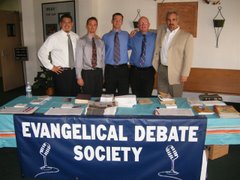
The Evangelical Debate Society
"Because they exchanged the truth about God for a lie and worshiped and served the creature rather than the Creator, who is blessed forever! Amen" (Romans 1:25).
Today marks the nationwide release of the summer motion picture blockbuster, Superman Returns. As many American's rush towards the theaters to experience firsthand, the latest and greatest groovy cinematic exploits of the man from Krypton, I am left wondering if contemporary Americana's fixation on fictitious Super heroes in glorified pajama's, leaves me wondering if there isn't something inherent within humanity that longs for to worship a figure that is greater than the themselves.
The wild cultural popularity of this super hero genre of films that has emerged from Hollywood is a seeming verification of the eminent German theologian and comparative religion scholar Rudolf Otto's thesis in his seminal and epic sociological work entitled, The Idea of the Holy, wherein Otto argues that all people in all cultures at all times seek to worship something that transcends the mundane. Otto argues that all men and women, irrespective of social stature and geographical location seek the numinous, or a non-rational, non-sensory experience of feeling whose primary and immediate object of fixation is external or outside of ones self. Otto derived this conception based on the Latin "numen" (Deity).
Popular American culture's worship and fascination with make believe hero's demonstrates the innate depravity of the human heart wherein people generally worship the created thing or make up "god's" for themselves like Aaron making the golden calf for the children of Israel. A pagan god that gives them some sense of spiritual satisfaction without the accountability to the true and living God as revealed in Holy Scripture. This universal trend towards depravity and idolatry is what the Apostle Paul refers to in Romans chapter one when he writes under the infallible guidance of the Holy Spirit,
"For the wrath of God is revealed from heaven against all ungodliness and unrighteousness of men, who by their unrighteousness suppress the truth. For what can be known about God is plain to them, because God has shown it to them. For his invisible attributes, namely, his eternal power and divine nature, have been clearly perceived, ever since the creation of the world, in the things that have been made. So they are without excuse. For although they knew God, they did not honor him as God or give thanks to him, but they became futile in their thinking, and their foolish hearts were darkened. Claiming to be wise, they became fools, 23and exchanged the glory of the immortal God for images resembling mortal man and birds and animals and reptiles" (Romans 1:18-23).
While the general American populace does not worship idols made with hands (unless you count their obsession with bigger and better homes and SUV's) yet this transcendent depraved condition towards idolatry is witnesses by our culture's worship of music stars, sports players and movie stars.
As Christians in a postmodern world given over to style without substance, to worship without accountability, we must turn to the preeminece of Jesus Christ and avoid drinking the sweet , indulgent Kool Aid of popular American culture that is good old satanic idolatry in disguise.
"Jesus Christ is the image of the invisible God, the firstborn of all creation. For by him all things were created, in heaven and on earth, visible and invisible, whether thrones or dominions or rulers or authorities--all things were created through him and for him. And he is before all things, and in him all things hold together. And he is the head of the body, the church. He is the beginning, the firstborn from the dead, that in everything he might be preeminent. For in him all the fullness of God was pleased to dwell, and through him to reconcile to himself all things, whether on earth or in heaven, making peace by the blood of his cross" (Colossians 1:14-20).
We must turn from our idolatry and abject sinfulness towards the true and living God who sent His only begotten Son Jesus Christ into the world to die upon the cross for our sins and rise again from the dead to give us eternal life if we sincerely repent from our sins and believe in the Gospel.
"The times of ignorance God overlooked, but now he commands all people everywhere to repent, because he has fixed a day on which he will judge the world in righteousness by a man whom he has appointed; and of this he has given assurance to all by raising him from the dead" (Acts 17:30-31).
Help End Abortion Now!
 Roe v. Wade, 410 U.S. 113 (1973) was a landmark United States Supreme Court case establishing that most laws against abortion violate a constitutional right to privacy, overturning all state laws outlawing or restricting abortion. It is one of the most controversial decisions in U.S. Supreme Court history. We here at the Evangelical Debate Society are dedicated to overturning Roe v. Wade and seeing the complete banning of Abortion throughout America.
For more info on how you can help stop abortion now please log on to :http://www.nrlc.org/
Tuesday, June 27, 2006
In Defense of Martin Luther

The German Reformer Martin Luther is getting a lot bunk filled criticism in theological circles today, but we here at the Evangelical Debate Society, support Luther and agree with his essential theological thesis that:
"We are justified by grace alone through faith alone in Christ alone based on the authority of the Bible alone for the Glory of God alone."
I am Theologian X

Contemporary Iconoclasm- the destroyer of pop icons in postmodern Americana...
Iconoclasm is the destruction of religious icons and other symbols or monuments, usually for religious or political motives. In Christian circles, iconoclasm has generally been motivated by a literal interpretation of the second of the ten commandments, which forbids the making and worshipping of "graven images". It has sometimes been motivated by christological or even political concerns as well.
Westminster Confession on Predestination
CHAPTER III.
Of God's Eternal Decree.
I. God from all eternity did by the most wise and holy counsel of his own will, freely and unchangeably ordain whatsoever comes to pass; yet so as thereby neither is God the author of sin; nor is violence offered to the will of the creatures, nor is the liberty or contingency of second causes taken away, but rather established.
II. Although God knows whatsoever may or can come to pass, upon all supposed conditions; yet hath he not decreed any thing because he foresaw it as future, as that which would come to pass, upon such conditions.
III. By the decree of God, for the manifestation of his glory, some men and angels are predestinated unto everlasting life, and others foreordained to everlasting death.
IV. These angels and men, thus predestinated and foreordained, are particularly and unchangeably designed; and their number is so certain and definite that it can not be either increased or diminished.
V. Those of mankind that are predestinated unto life, God, before the foundation of the world was laid, according to his eternal and immutable purpose, and the secret counsel and good pleasure of his will, hath chosen in Christ, unto everlasting glory, out of his free grace and love alone, without any foresight of faith or good works, or perseverance in either of them, or any other thing in the creature, as conditions, or causes moving him thereunto; and all to the praise of his glorious grace.
VI. As God hath appointed the elect unto glory, so hath he, by the eternal and most free purpose of his will, foreordained all the means thereunto. Wherefore they who are elected being fallen in Adam are redeemed by Christ, are effectually called unto faith in Christ by his Spirit working in due season; are justified, adopted, sanctified, and kept by his power through faith unto salvation. Neither are any other redeemed by Christ, effectually called, justified, adopted, sanctified, and saved, but the elect only.
VII. The rest of mankind, God was pleased, according to the unsearchable counsel of his own will, whereby he extendeth or withholdeth mercy as he pleaseth, for the glory of his sovereign power over his creatures, to pass by, and to ordain them to dishonor and wrath for their sin, to the praise of his glorious justice.
VIII. The doctrine of this high mystery of predestination is to be handled with special prudence and care, that men attending to the will of God revealed in his Word, and yielding obedience thereunto, may, from the certainty of their effectual vocation, be assured of their eternal election. So shall this doctrine afford matter of praise, reverence, and admiration of God; and of humility, diligence, and abundant consolation to all that sincerely obey the gospel.
Kurt Cobain, Nietzsche and the Kingdom of God


Nihilism...
is a philosophical position which argues that the world, and especially human existence, is without objective meaning, purpose, comprehensible truth, or essential value. Nihilists generally believe all of the following: There is no reasonable proof of the existence of a higher ruler or creator, a "true morality" is unknown, and secular ethics are impossible; therefore, life has no truth, and no action is known to be preferable to any other.
Nihilism is often more of a charge leveled against a particular idea, movement, or group, than a position to which someone overtly subscribes. Movements such as Dadaism, Deconstructionism, and punk have been described at various times as "nihilist". Usually this simply means or is meant to imply that the beliefs of the accuser are more "substantial" or "truthful", whereas the beliefs of the accused are nihilistic, and thereby comparatively amount to "nothing".
Nihilism is also a characteristic that has been ascribed to time periods: for example, Baudrillard has called postmodernity a nihilistic epoch, and some Christian theologians and figures of authority assert that modernity and postmodernity represent the rejection of God, and therefore are nihilistic.
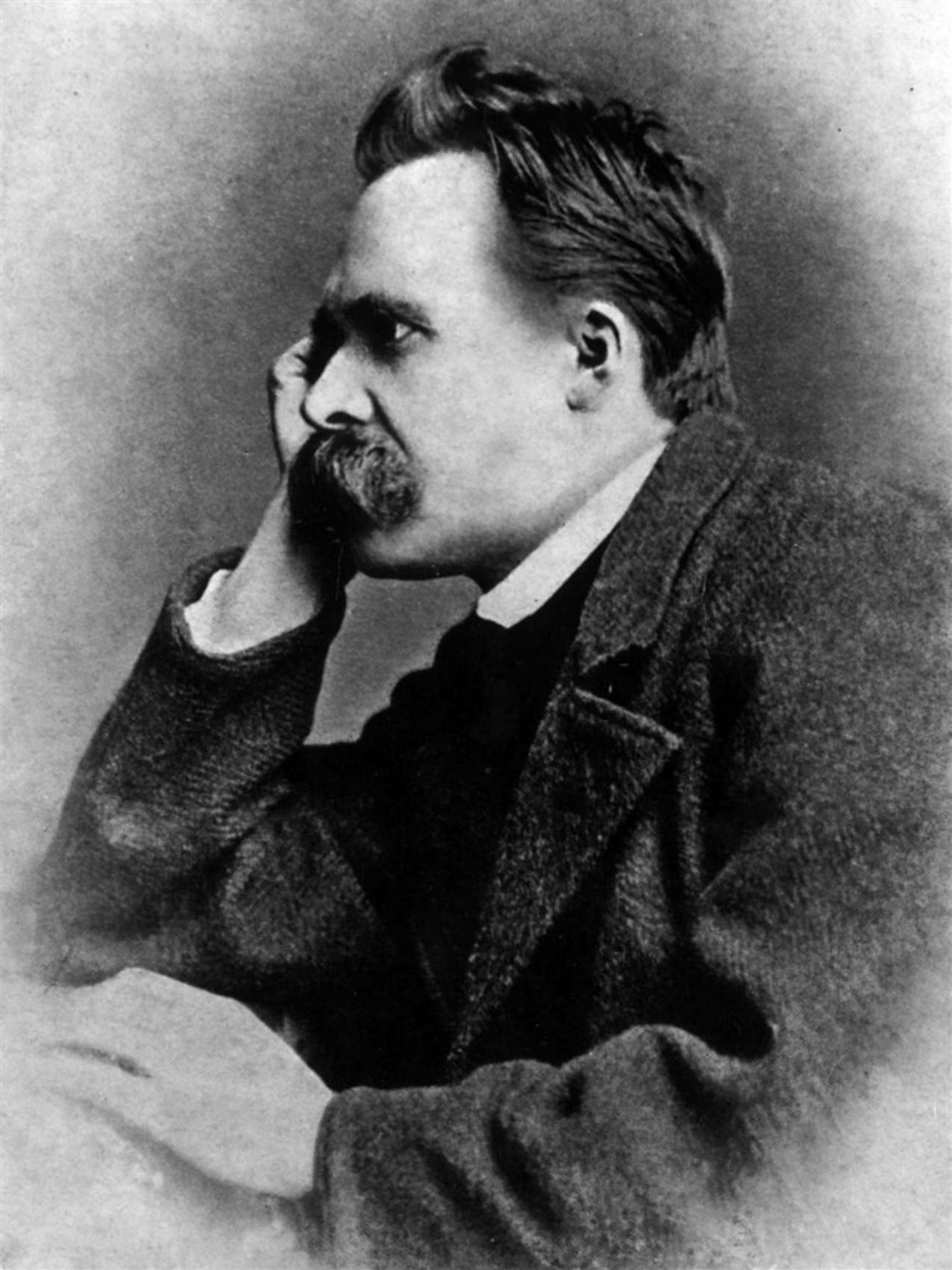
Prominent philosophers who have written on the subject of nihilism include Friedrich Nietzsche and Martin Heidegger. Nietzsche described Christianity as a nihilistic religion because it evaded the challenge of finding meaning in earthly life, creating instead a spiritual projection where mortality and suffering were removed instead of transcended. He believed nihilism resulted from the "death of God", and insisted that it was something to be overcome, by returning meaning to a monistic reality (he sought instead a "pragmatic idealism," in contrast to the prominent influence of Schopenhauer's "cosmic idealism"). Heidegger described nihilism as the state where "there is nothing left of Being as such," and argued that nihilism rested on the reduction of Being to mere value.
Nihilism and God is dead...
Nietzsche saw nihilism as the outcome of repeated frustrations in the search for meaning. He diagnosed nihilism as a latent presence within the very foundations of European culture, and saw it as a necessary and approaching destiny. The religious worldview had already suffered a number of challenges from contrary perspectives grounded in philosophical skepticism, and in modern science's evolutionary and heliocentric theory. Nietzsche saw this intellectual condition as a new challenge to European culture, which had extended itself beyond a sort of point-of-no-return. Nietzsche conceptualizes this with the famous statement "God is dead", which first appeared in his work in section 108 of The Gay Science, again in section 125 with the parable of "The Madman", and even more famously in Thus Spoke Zarathustra. The statement, typically placed in quotation marks,[1] accentuated the crisis that Nietzsche argued that Western culture must face and transcend in the wake of the irreparable dissolution of its traditional foundations, moored largely in classical Greek philosophy and Christianity.[2]
Monday, June 26, 2006
Kurt Cobain: The Prophet of Destruction

Hey wait...I've got a new conplaint...

It is doubtful there has ever existed an anti-establishment figure who ironically became the establishment as Kurt Cobain (1967-1994), the scraggly haired, alternative rock guitarist and frontman of the Seattle area grunge band Nirvana who played in my hometown Ann Arbor Michigan on April 10, 1990.
A generation of young people were heavily influenced by the sound and self-destructive ethos of Kurt Cobain and Nirvana, so much, that the entire music scene was changed forever after hearing Cobain and his grunge mates alternate between punk rock, heavy metal and Beatlesque pop ballads all in the same song.
In 1991 Nirvana's Nevermind Album caused an international sensation, thrusting the sensitive and drug addicted Cobain to the forefront of popular western culture, something his music ironically decried and loathed with their very being...
The essential ideological ethos of all of Cobain and Nirvana's music was nihilism, angst, disillusionment and total disenfranchisement from the mainstream society that ultimately christened Cobain as a sort of anti-Elvis pop icon.
In the end Kurt Cobain was a rebel, instead of turning to God in order to be healed from the intense pain and sense of alienation he felt, Cobain became a blasphemer, whose hatred of God and absolute truth is an essential motive throughout his music. Now more than likely Cobain, who sang of his alienation from society will now spend eternity in the lake of fire, forever separated and alienated from Almighty God.
Ironically, Cobain fulfilled the destiny of the following Nirvana Song entitled, Lake of Fire,
Where do bad folks go when they die?
They don't go to heaven where the angels fly
They go to the lake of fire and fry...

Just Say No to Pot: Should Marijuana be Legalized?

In recent years, there has been a major movement in California to legalize Marijuana by various organizations. Because of the interest in this subject on university and college campuses here in California, we have decided to host a debate on this subject at a University nearby. Stay tuned for the Pot Debate: Should Marijuana be Legalized?
Subscribe to:
Posts (Atom)